Whoa! I know—hardware wallets usually conjure up bulky boxes and tiny screens. Seriously? Yep. But somethin’ else is happening: smart-card form factors are quietly changing the game. They’re thin, durable, and fit in a wallet pocket like a credit card. At first glance they feel… almost casual. And that casualness is exactly the point.
Okay, so check this out—I’ve been juggling seed phrases, multiple devices, and at least one terrifying «where-did-I-put-that-paper» moment. My instinct said: there has to be a simpler way. Initially I thought the answer would be software-only, but then I realized that hardware-level security plus portability is the sweet spot. On one hand you want cold storage that’s offline; though actually you also want something you’ll use daily without dread. That tension is what smart-card wallets try to resolve.
Why consider a smart-card wallet for multi-currency custody? Short answer: convenience without giving up core security primitives. Medium answer: they store keys securely in a tamper-resistant element and let you sign transactions through near-field or Bluetooth bridges. Long answer: depending on the implementation, the card can act as the sole root of trust, support multiple blockchains via standards like BIP-39/BIP-44 or native key management, and integrate with custodial and non-custodial apps while keeping private keys off exposed device memory.
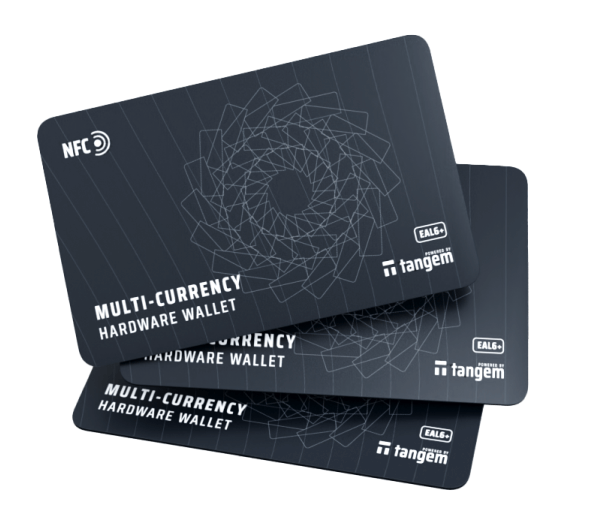
How the smart-card approach actually works
Think of the card as a tiny vault. Short sentence. You tap or connect it to an app. The app shows the unsigned transaction details. Then the card signs it inside its secure element, and the signature goes back to the app for broadcast. Simple syntax, complex engineering. My first impression was skeptical—could a card really match the protections of a full-blown hardware device? But then I dug into hardware roots of trust and secure element certifications, and that changed the calculus.
Here’s what it buys you practically: portability you’ll actually live with, near-zero setup anxiety for many users, and less dependence on remembering or safely storing long mnemonic phrases. I’m not saying mnemonics are dead. Not at all. But if your goal is to make secure custody less fragile without dumbing it down, smart cards are compelling. I’m biased, but they feel like the best compromise I’ve used between human factors and actual security.
Check this out—some modern smart-card wallets also come with robust recovery options, multi-currency applets, and options for enterprise provisioning. That matters. Many small devices support only one or two token formats; cards skew toward flexibility. And if you’re into self-custody but hate the idea of a thirty-word paper in a shoebox, this is for you.
Real risks and where to be careful
Whoa! Hold up. Not every slim wallet is equal. Short. Certification matters. Medium sentence. Look for devices with a secure element, proper key isolation, and ideally a security evaluation you can read. Longer: a vendor claiming «bank-grade» without proof should make you squint, because marketing is loud and audits are what matter in the quiet, boring parts of crypto security.
On the technical side, pay attention to how the device handles firmware updates and key derivation. Some cards keep the private key completely isolated—updates are only for enabling new blockchain applets—whereas others require more invasive procedures that could increase attack surface. Initially I assumed all cards were inherently safer because they’re small and sealed, but then I saw how poor update flows or weak supply-chain controls can undercut that advantage. So yeah—supply chain hygiene is a real concern.
Another practical wrinkle: UX trade-offs. When you’re designing for security, you sometimes make the interface clunky. Some cards purposefully limit on-device displays to reduce risk, but that makes transaction verification harder. On the other hand, cards that pair with well-designed companion apps let you inspect details in richer form—the best compromise in my view.
Multi-currency support: what actually works
Here’s the thing. Multi-currency isn’t just «Ethereum plus Bitcoin.» Short. It can mean support for UTXO chains, account-based chains, EVM chains, and even Layer 2 rollups. Medium. The best solutions abstract key management from chain-specific logic, using derivation paths and applets to map keys to networks. Longer sentence: that allows a single root key to be used safely across many chains while the card enforces signing policies and prevents private key exfiltration, which is crucial when you hold multiple assets.
I’m not 100% sure which future chains will become dominant, though it’s likely landscapes will fragment. Still, a card that supports adding applets and updating chain support is more future-proof than a locked box that only recognizes whatever tokens were fashionable two years ago. Oh, and by the way—hardware compatibility with open-source wallets builds trust, because you can inspect client behavior rather than trusting closed ecosystems.
For those who need enterprise-grade operation, cards can be provisioned at scale with individual credentials and lifecycle controls, or integrated into multi-sig workflows. That flexibility is underrated. In some designs, a card acts as one key in a multi-sig wallet, reducing the risk of a single-point failure. That design is both practical and elegant.
Experience I had—and what it taught me
I’ll be honest—I carried one for six months as my daily driver while traveling. Some days it lived in a back pocket. Other days it rode in a small organizer with my boarding pass. It survived coffee spills, airport scanners, and my forgetful brain. That felt liberating. Short. But one time I fumbled the pairing code and had to factory reset something I shouldn’t have. Oops. Medium. On reflection, the experience taught me that convenience is only useful when recovery flows are straightforward and tested—if a device is too fragile operationally you’ll avoid it, and security then becomes a fantasy.
There’s also a human component: people will reuse PINs, store cards physically near compromising devices, or share configuration steps without fully understanding the risks. Longer: designing for human error—clear labels, simple recovery, and sane defaults—matters just as much as cryptographic primitives. That part bugs me when vendors focus only on specs and not on how real people behave.
How to evaluate a smart-card wallet today
Short checklist time. Short. First: check the secure element and certification status. Medium. Second: examine firmware update policy and whether updates are signed and verifiable. Medium. Third: confirm how recovery works—is it seed-based, social recovery, or a combination? Longer: fourth, look for multi-currency support and app compatibility with reputable wallets, and fifth, read community audits and reviews because real-world use uncovers issues specs don’t list.
Okay—practical tip. If you want a hands-on test, buy one low-value asset, move it, practice recovery, and then scale up. That process helps you learn the nuances of the product without risking your life savings. Also, test any companion app on different platforms; Android and iOS behaviors can differ, particularly around NFC permissions and Bluetooth behavior.
Where to try one
If you’re curious and want a vendor-neutral starting point, try reading vendor docs and community write-ups, then get a device from a trustworthy source. For a concrete example of a modern smart-card solution with multi-currency support and practical form factor, look into tangem—it’s one of the better-known entries in this space and worth seeing firsthand for its approach to secure elements and wallet ergonomics.
FAQs
Are smart-card wallets as secure as cold-storage hardware devices?
Short answer: generally yes, if the card uses a certified secure element and enforces strong signing policies. Medium answer: physical form factor doesn’t inherently reduce security; implementation does. Longer: you should verify certifications, audit reports, and how recovery is handled—security is a system, not a single component.
Can I store many different cryptocurrencies on a single card?
Yes, many cards support multiple chains via applets or derivation paths. Short caveat: chain support varies, and some exotic or new chains might not be available immediately. Medium: check the vendor roadmap if a particular chain matters to you.
What happens if I lose the card?
Depends on recovery setup. If you have a seed or backup mapped to that card, you can restore to another device. Short: if no backup exists, loss may mean loss of funds. Medium: design your recovery plan before you trust the card with significant assets.